
This September, Ian Mackay set out from Albany to travel 360 miles of the Erie Canalway Trail to Buffalo in his power wheelchair. He planned to experience the trail firsthand, document its accessibility, connect with others with disabilities, and meet the communities along the Erie Canal.
Nine days later, Ian and his crew finished the adventure tired, grateful and, by Ian’s own account, having completed one of their favorite rides yet.
Here’s a quick look at the journey.
Albany to Amsterdam
The ride kicked off in the rain, which put Ian’s wheelchair, electronics and navigation skills to the test. A confusing trail closure, limited detour signage and a dead phone battery made the first day more complicated than expected. But there were bright spots, too, including Ian’s parents showing up with hot drinks and snacks and the crew ending the day with dinner and a well-earned beer.
Amsterdam to Little Falls
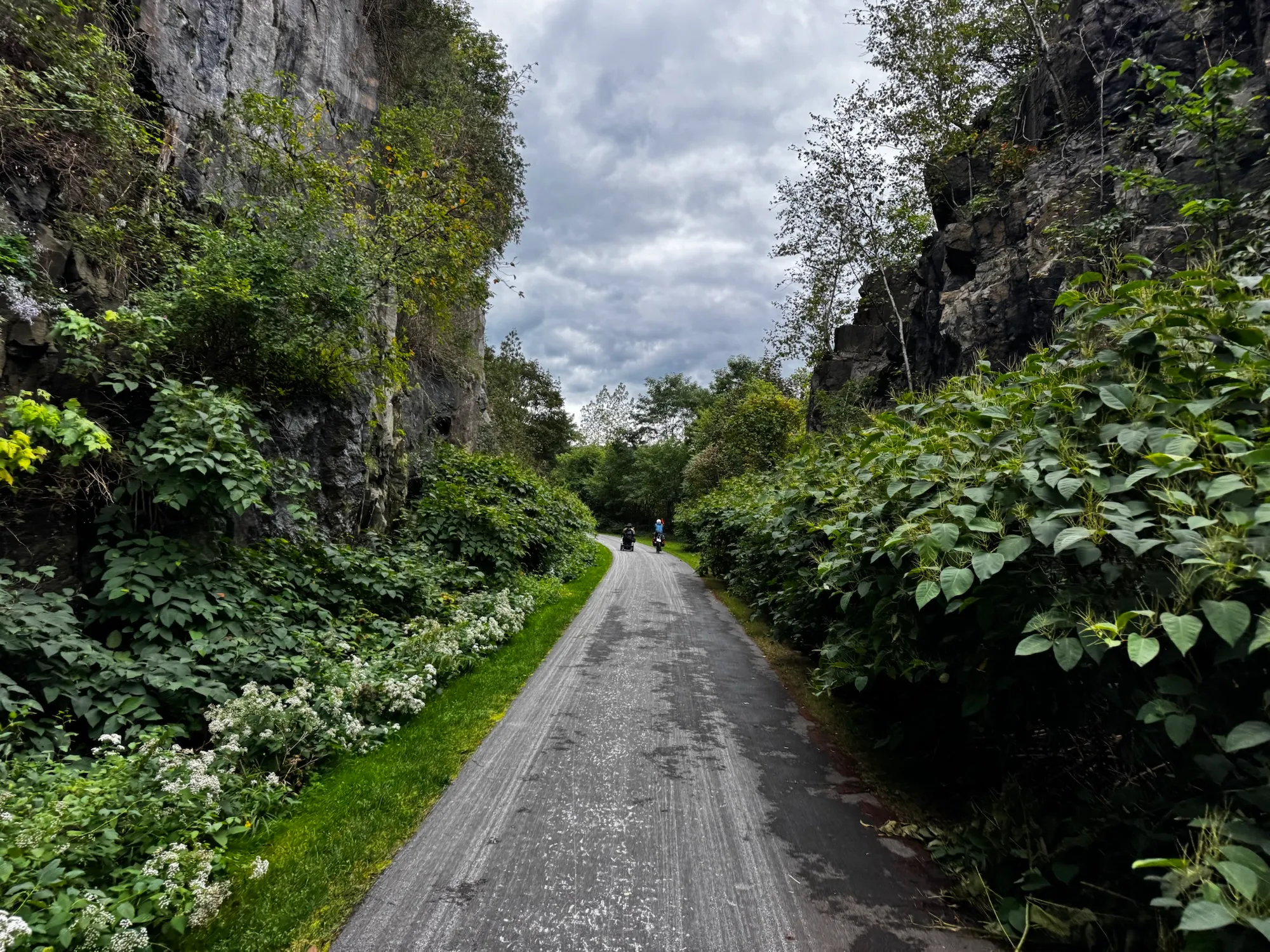
With better weather came some of Ian’s favorite riding. The trail passed through forests and along the canal, with smooth packed-gravel sections, wildlife and historic canal features.
There were challenges, too. Root buckling became increasingly noticeable, and one rough stretch was enough to knock a fender off Ian’s wheelchair. For Ian, that’s more than an annoyance. The condition of the trail directly affects his ability to travel safely and independently.
The day ended with a memorable welcome from a local brewery owner who kindly kept his doors open after hours!
Little Falls to Rome
The scenery along this stretch was great, but a trail closure near Utica sent the group onto city streets. Ian found himself navigating a busy four-lane road with no shoulder, an obstructed sidewalk and drainage grates that created additional challenges for his wheelchair.
Once the group made it back to the trail, the riding immediately became easier and more enjoyable. Accessibility isn’t just about the trail itself. Connections, crossings and detours matter.
Rome to Syracuse
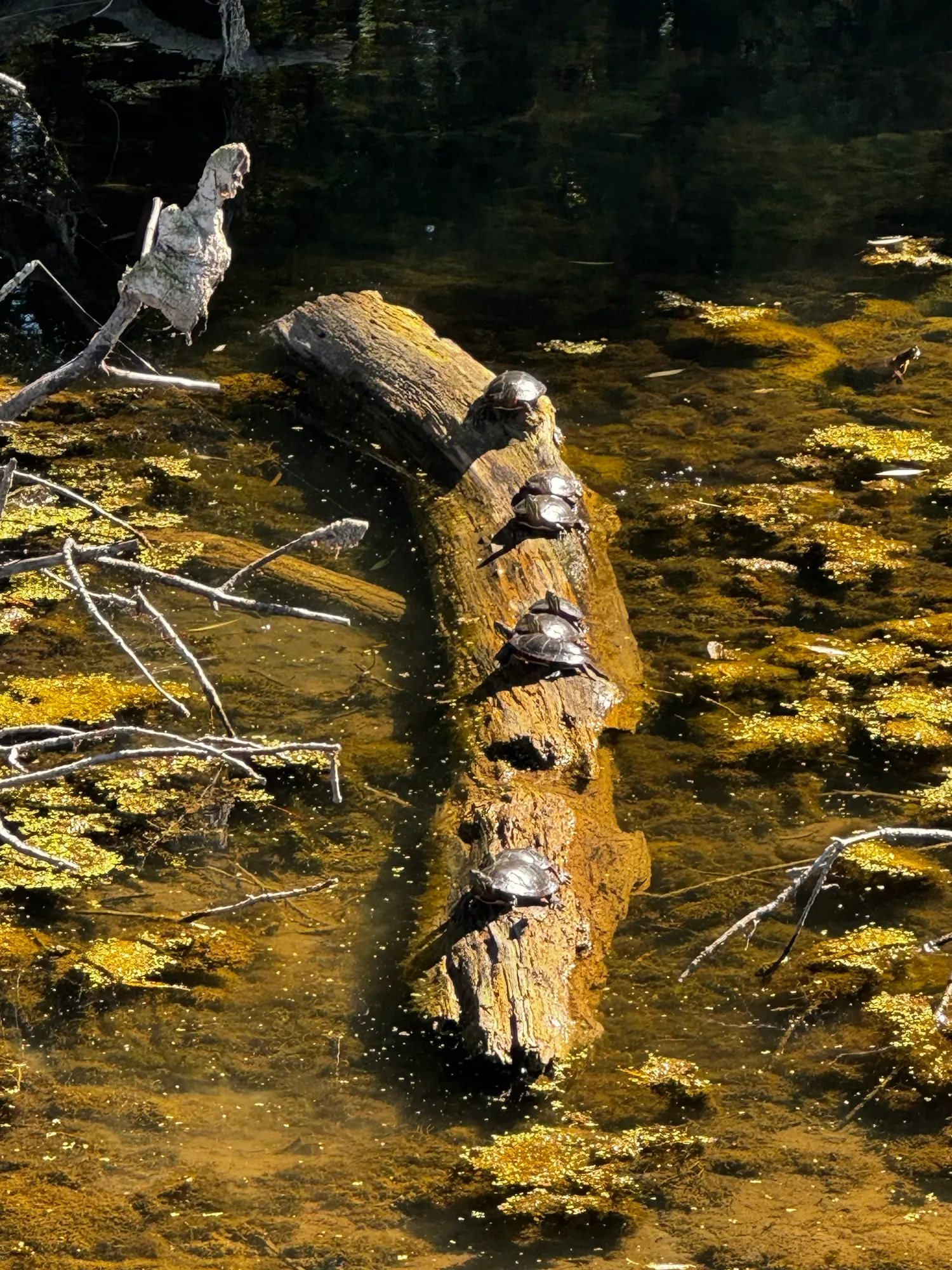
Traveling through the Old Erie Canal State Historic Park, Ian got to experience the history of the canal alongside its natural beauty. Turtles, birds, plants and changing landscapes became part of the ride, while historic interpretation helped tell the story of the waterway.
Syracuse to Weedsport
The crew visited the Erie Canal Museum and Camillus Erie Canal Park and learned more about the canal’s history and its role in shaping New York.
Members of the New York State Canal Corporation also joined the ride, giving them an opportunity to experience the trail alongside Ian and better understand what it looks like from a wheelchair user’s perspective.
Beyond Camillus, smooth packed-fine surfaces and quieter stretches made for some of Ian’s favorite riding of the trip.
Weedsport to Rochester
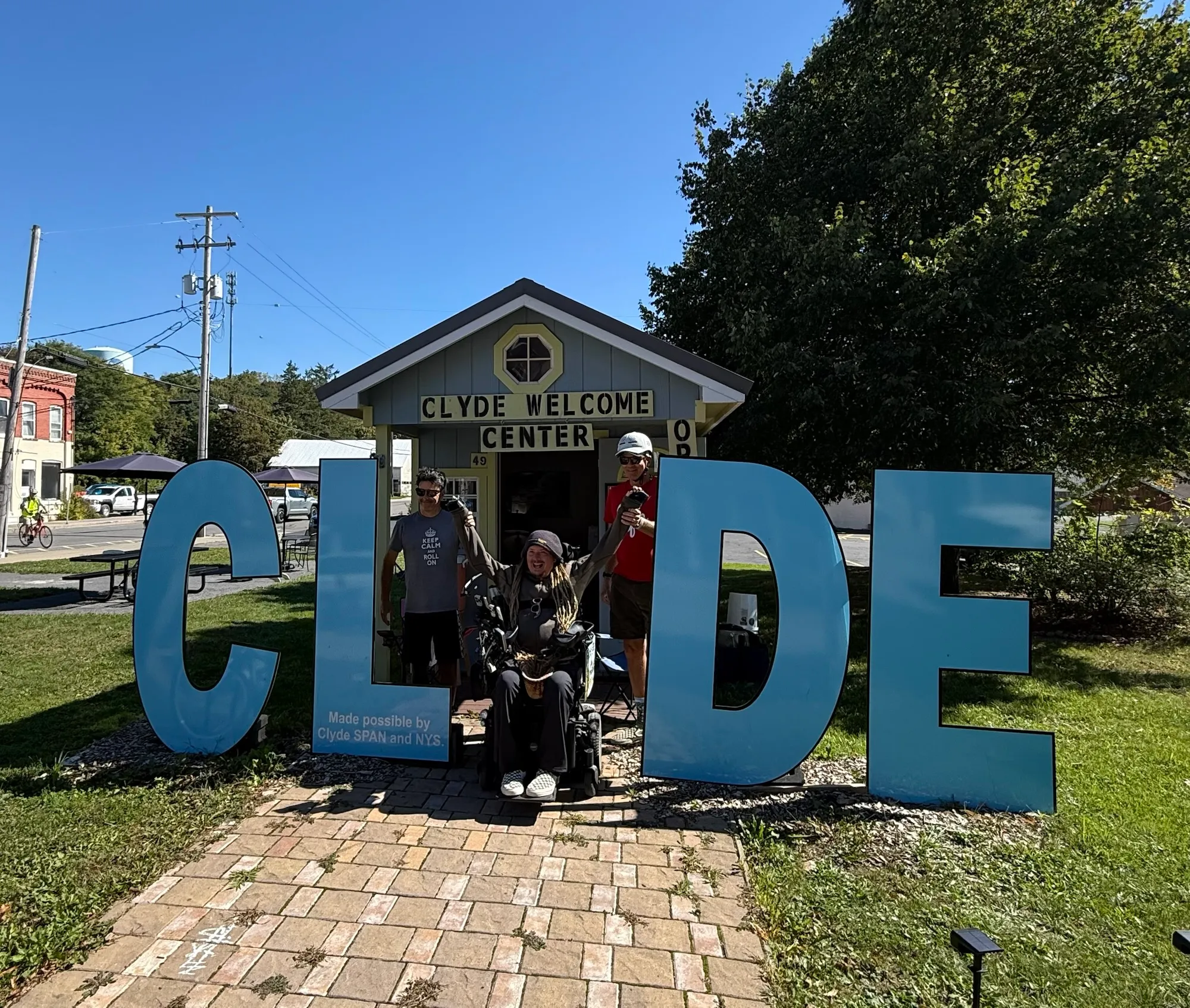
As Ian traveled west, the people he met became as memorable as the places. Local cyclists rode out to meet the crew in Clyde. In Newark, Ian connected with another wheelchair user and talked about the realities of living with a disability in upstate New York. The trail has a way of connecting communities and bringing people together.
Rochester to Albion
Near Rochester, Ian connected with Rochester Accessible Adventures and saw adaptive boats, bikes and trikes, along with an accessible boat launch.
For Ian, that’s what accessibility is really about. It’s not only being able to travel down a trail. It’s being able to participate in the experiences surrounding it. It’s about exploring, recreation, and meeting people.
By the time the crew reached Albion, they had covered more than 300 miles. Ian’s wheelchair was showing the wear of the journey, but there was still plenty to see, including ospreys, muskrats, snakes and a bald eagle.
Buffalo
Finally, the crew reached Buffalo.
Looking back, Ian says the Erie Canalway Trail has become one of his favorite major rides. What stayed with him wasn’t just the scenery or the engineering of the canal, but the connections: a stranger buying the crew dinner, someone handing Ian $100, a brewery sending them on their way with beer and shirts, people cheering from boats and along the canal, and state employees, business owners, cyclists and advocates becoming part of the journey.
The ride also showed where there is more work to do. Ian experienced smooth, enjoyable stretches alongside rough surfaces, confusing detours, difficult crossings and infrastructure that made travel more challenging for a wheelchair user.
Ian’s journey is about all of us. As he reflects, our physical abilities change throughout our lives. Accessible trails help ensure that more of us can continue to connect with our communities and enjoy the outdoors throughout our lives.
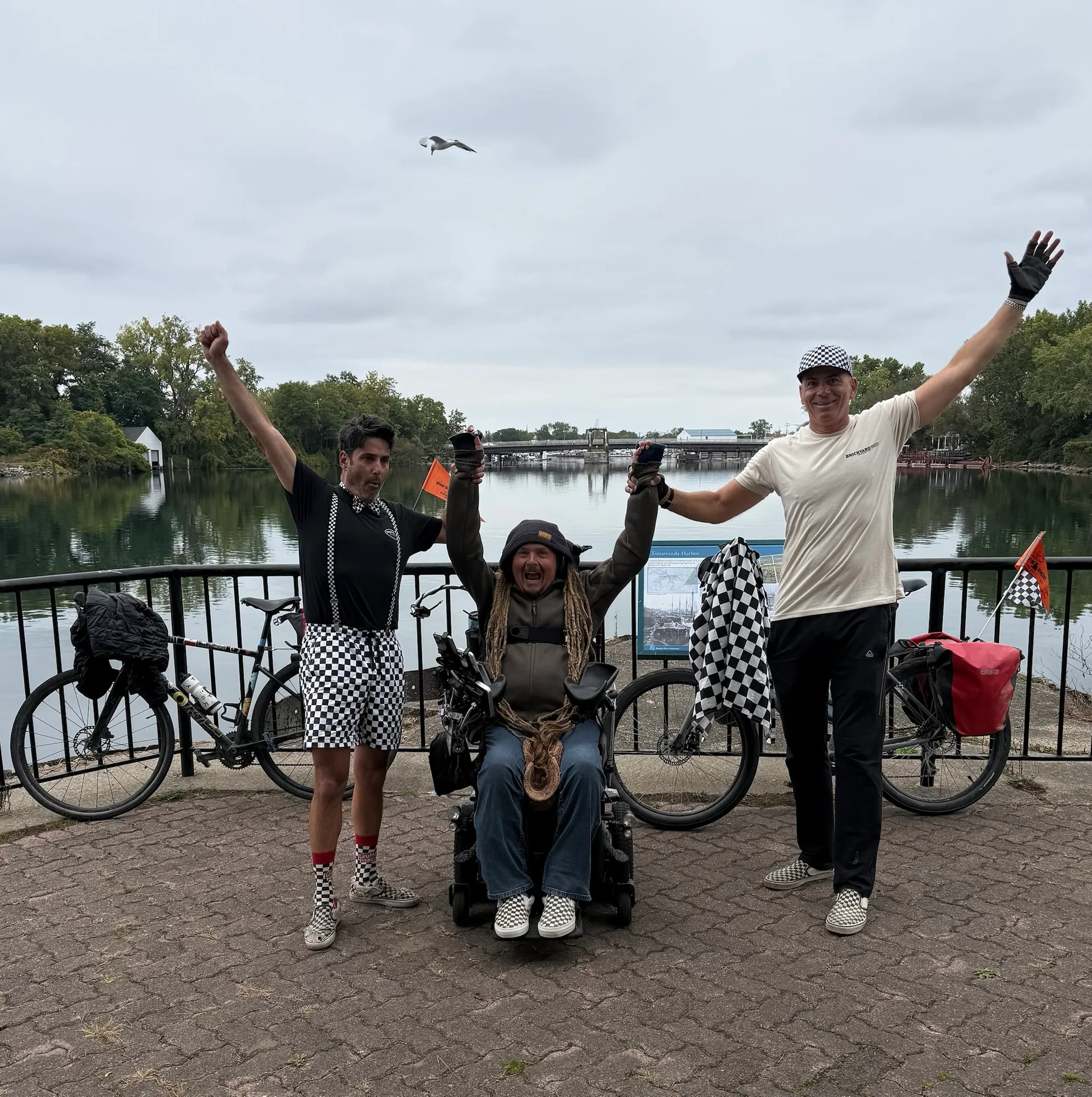
Congratulations, Ian!
Congratulations, Ian, on an incredible ride! We loved following along with you and your crew as you made your way across New York, and we are grateful that you shared the experience so openly with all of us.
Your firsthand observations gave us a much better understanding of what works on the Erie Canalway Trail, and where there is still room to improve. The details you shared about trail surfaces, detours, crossings, signage and connections are exactly the kind of insight that can help us think more thoughtfully about accessibility as we work to make New York’s trails better for everyone.
Want to experience the journey? Read Ian’s full day-by-day blog posts to hear about the trail, the people, the wildlife, the challenges, the laughs, and everything in between.