

Train travel can open up more possibilities for exploring New York’s Empire State Trail. Cyclists can take the train to a starting point, ride between trail towns, and use rail service to return home after a one-way journey. These connections make it easier to plan longer rides and explore more of the state. With the right rail connections, the journey doesn’t have to end where the ride does.
Where New York’s Rail System Falls Short
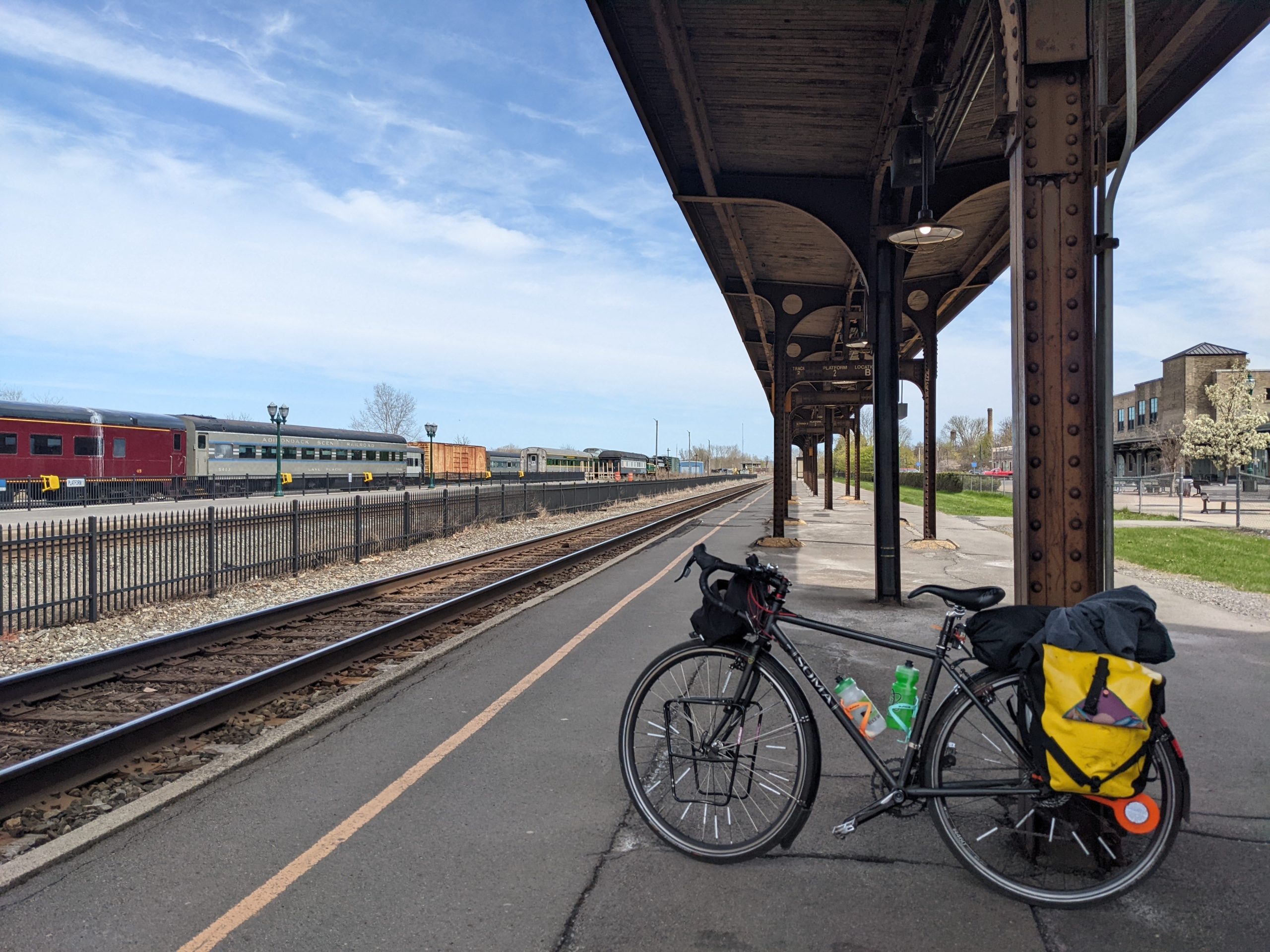
The recently published Bicycle-Friendly Trains Report from the League of American Bicyclists found that there are significant opportunities to improve the rail travel experience for cyclists. The report compared New York’s systems with approaches used in Europe and other states. It found that all New York train lines but one were rated in the moderate category. The Adirondack Line received a very poor rating for no bicycle service offering. These low ratings make it more difficult for cyclists to travel by train between Albany and the Canadian border along the Empire State Trail.
The report highlights the common challenges for cyclists traveling by train– dealing with fees and inadequate bike storage. Across the country, these fees vary by line and can add up quickly, making their journey expensive. Clearer information about bicycle service, more consistent reservation systems, and better onboard storage could help make train travel a more practical option for cyclists.
Why Bike-Friendly Rail Matters
Better connections between trains and trails don’t just benefit cyclists. Visitors who travel by bike support the communities they pass through, spending money at restaurants, lodging, and other businesses along the way. On average visitors to the Empire State Trail who stay over night spend an average of $540 per visit.
Making it easier to bring a bike on a train also gives cyclists more flexibility. After a long ride like the Empire State Trail, the option to take the train home can make an end-to-end adventure much more manageable.
Making Bike-Friendly Rail a Reality
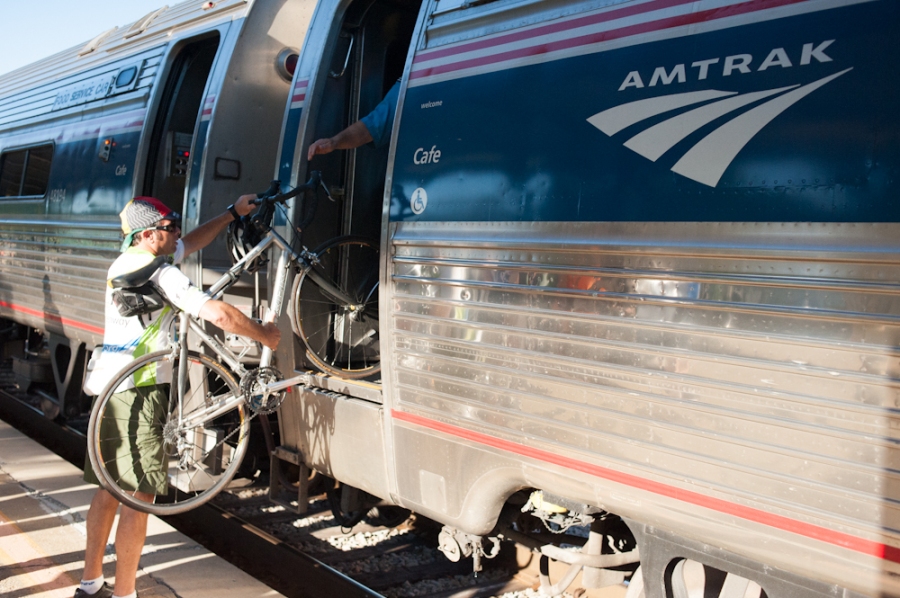
At PTNY, we are advocating for improvements that make it easier for cyclists to connect with rail service. We’re working to create safe approaches to Amtrak stations, secure bicycle parking, visible signage, and bikeshare integration where possible, in line with the recommendations in the report. Other priorities include clear, at-a-glance signage showing which stations offer bike service, fixing inconsistencies in reservation systems, and offering bundled rail and bike passes.
Affordability is another important part of making train travel more accessible to cyclists. In Vermont, the Department of Transportation subsidizes bicycle tickets, keeping their cost below $20. Adopting a similar approach could help make train travel with a bicycle more affordable and encourage more people to explore New York by trail and rail.
A More Connected New York
Improving connections between trains and trails is also a step toward a more equitable and sustainable transportation system. As we work to combat climate change, alternative transportation is a growing priority.
The transportation sector accounts for 26–30% of greenhouse gas emissions in New York State, and approximately 30% of New York State households lack access to a car, according to NYSERDA and the U.S. Census Bureau. Better connections between rail service and trails can help more people enjoy public recreational resources.
Planning Your Ride
Interested in riding the Erie Canalway Trail end to end? We have a guide to using the train to make the trip! This step-by-step guide covers the three Amtrak lines serving the corridor: the Maple Leaf, Empire Service, and Lake Shore Limited. You’ll also find helpful tips and tricks for planning your journey.