

Picture this: a 280-mile trail, connecting 21 communities from Buffalo to Pennsylvania.
Sounds crazy, right? Not anymore. This project is quickly becoming reality. A former rail line in Western New York will be transformed into a continuous trail that invites people to walk, bike, explore, and experience Western New York in an entirely new way.
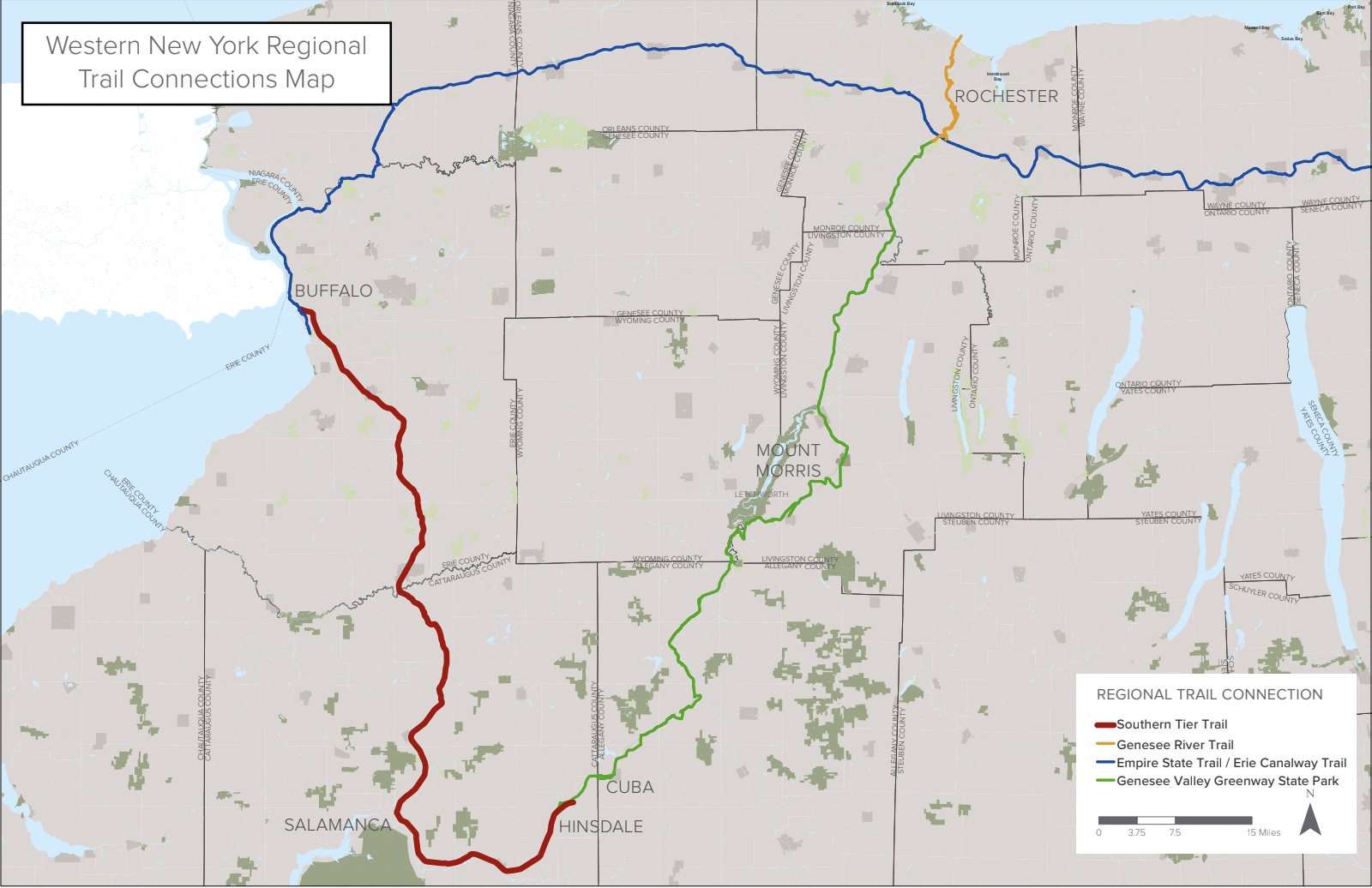
When complete, the Southern Tier Trail will link Buffalo to the Pennsylvania border, creating a 280 mile loop and tying into the 750 mile Empire State Trail and the 90 mile Genesee Valley Greenway State Park.
This project is about much more than building a trail. It is the path to building stronger connections between communities across Western New York. That means more opportunities to explore, spend time outdoors, support local businesses, and experience a new region of New York State.
From Rail Corridor to Regional Asset
The route of the Southern Tier Trail follows the former Buffalo, Rochester and Pittsburgh Railway corridor, a line that once played a major role in moving coal and goods across the region.
In the late 1800s, this corridor supported New York’s growing demand for energy and industry. Over time, like many rail lines, it faced financial challenges, changes in ownership, and eventual decline.
Today, that same corridor is getting a new life! Across New York State, rail to trail conversions have transformed former rail lines into vibrant public spaces that people use every day. These projects preserve history while creating safe, accessible places for recreation and transportation.
The Southern Tier Trail builds on that success with an approximately 80 mile vision that will connect communities, highlight regional landscapes, and create new opportunities for local economies along the route.
A Critical Link: The Erie Cattaraugus Rail Trail
As one of the most advanced segments, the Erie Cattaraugus Rail Trail serves as a northern gateway, linking the Buffalo region to Springville along a planned 27 mile route. The trail passes through Orchard Park, Aurora, Colden, Concord, and Ashford, connecting communities along the former rail corridor.
Designed as a safe, off road, multi use path, the trail supports walking, biking, and year round recreation. And the exciting part is that people are already using it.
Multiple segments are currently open in Orchard Park, Springville, and East Concord, with roughly a dozen miles already accessible. These sections are giving residents and visitors an early look at the potential of the larger Southern Tier Trail while showing growing local demand for continued expansion.
West Falls is another community helping move the project forward. A recent $4.5 million NY Forward grant to revitalize the downtown area will help strengthen connections between trail segments and continue building momentum along the corridor.
It is a great example of how local investment can help power a much larger regional vision.
As more sections come online, trail users can look forward to quiet rural landscapes, standout destinations like the High Trestle Cascade Bridge, and so much more.
Cattaraugus County at the Forefront
Cattaraugus County is playing a major role in moving the Southern Tier Trail from vision to reality.
With support from a 7 million dollar federal RAISE grant, the county is advancing planning and design work in partnership with GObike and Colliers Engineering and Design.
This effort includes finalizing trail alignments, completing environmental review and permitting, designing trailheads and amenities, and developing long term operations and maintenance plans.
The project spans approximately 52 miles through 11 municipalities and the Seneca Nation of Indians. This work represents a major step toward construction and long term implementation.
Momentum around the Southern Tier Trail is clearly growing, and this investment marks an important turning point for the project.
Reimagining Landmarks: The High Trestle Cascade Bridge
One of the most exciting future features along the route is the transformation of the High Trestle Cascade Bridge.
Once part of the region’s rail infrastructure, the bridge is being reimagined as a safe and scenic crossing that could become a signature destination along the trail network.
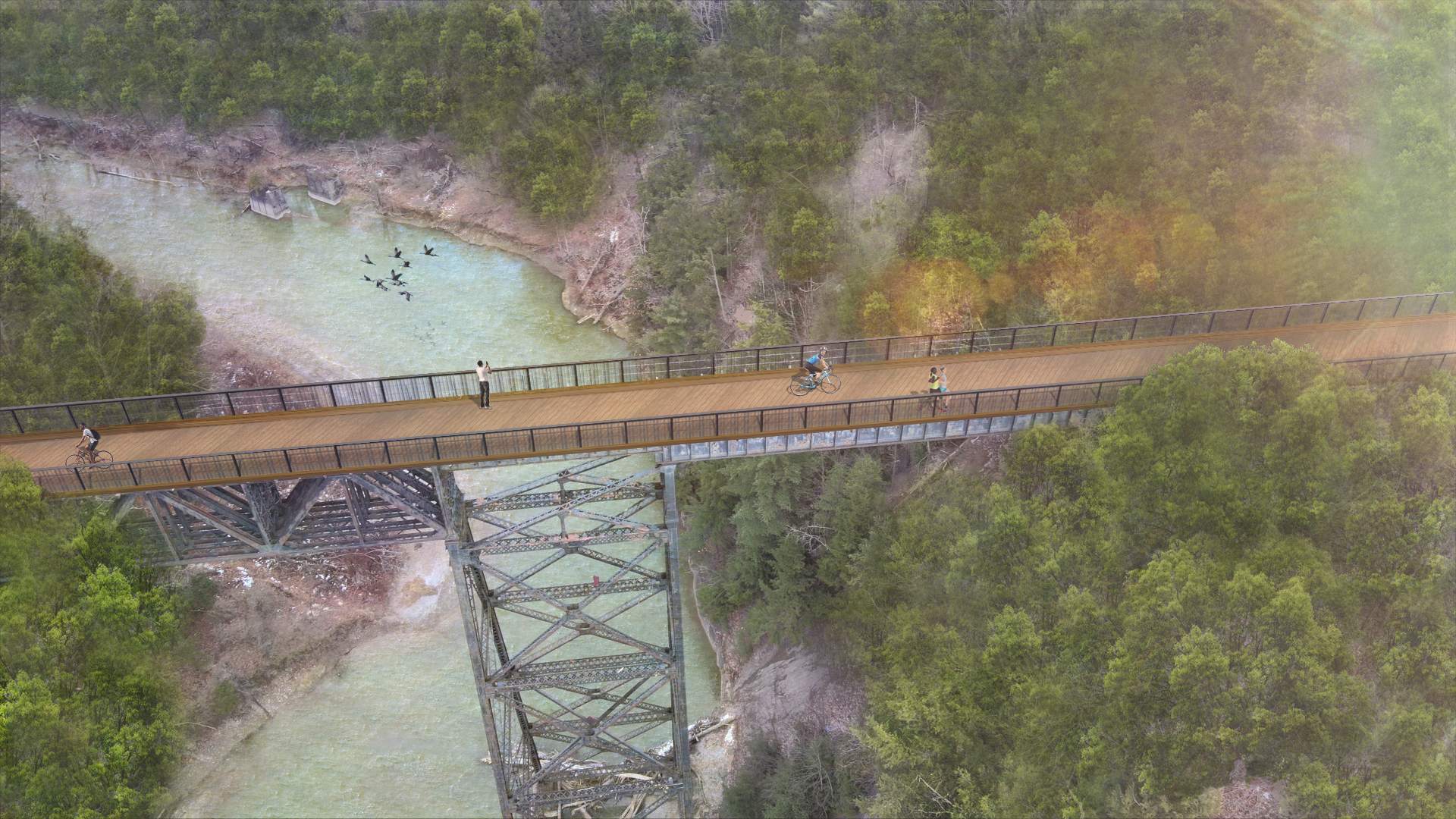
Recent funding from state programs, regional initiatives, and philanthropic partners is helping move the project closer to reality through design work and cost analysis. Plans include new decking and features shaped by public input and community engagement.
For future trail users, the bridge has the potential to become one of the defining experiences along the Southern Tier Trail.
Building Momentum: The Western New York Greenways Planning Summit
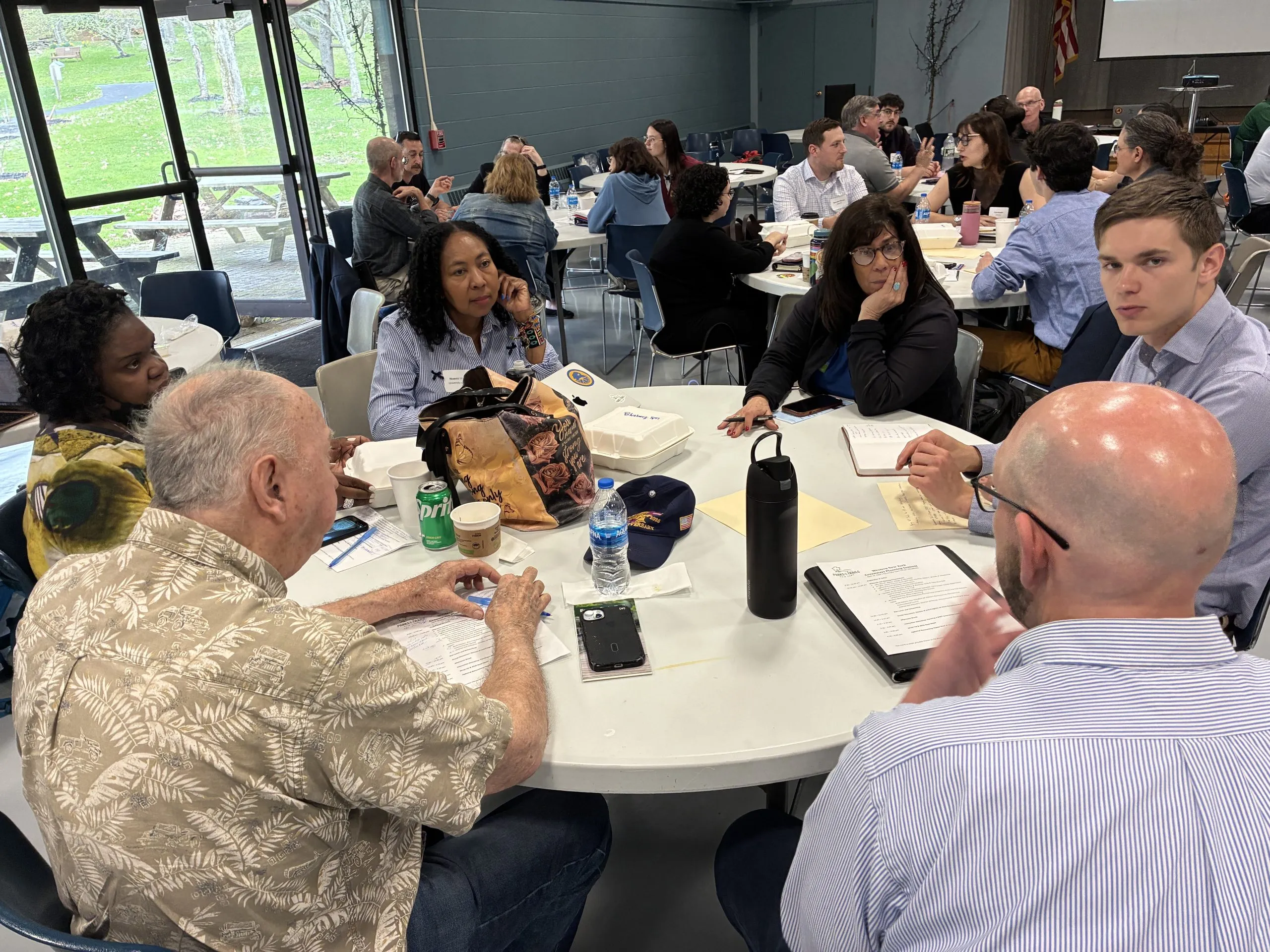
Projects like this do not happen alone. They move forward through collaboration, partnerships, and a shared vision.
This past April, PTNY hosted our second annual Western New York Greenways Planning Summit in Ellicottville, along the route of the future Southern Tier Trail. The day-long gathering brought together more than 80 planners, advocates, community leaders, and organizations working to strengthen and connect trail systems across the region, reflecting growing excitement around and commitment to trail development in Western New York.
These conversations help ensure that transformative projects like the Southern Tier Trail can come to fruition, and that they can spur the creation of larger connected networks in a broader region rather than isolated segments.
Out of this work, a regional greenway coalition is beginning to take shape with the goal of sustaining collaboration, coordinating funding strategies, and accelerating progress across Western New York.
That kind of coordination matters because trails have the greatest impact when they connect communities across an entire region.
A Trail Worth Watching
The Southern Tier Trail is quickly becoming one of the most exciting trail projects in Western New York.
It is breathing new life into a historic corridor while creating new opportunities for recreation, transportation, tourism, and economic growth.
While much of the trail is still in development, real progress is already happening on the ground. Each completed segment brings the region one step closer to a fully connected trail system.
For communities along the route and for New Yorkers looking to experience more of their state, the Southern Tier Trail is absolutely a project worth watching. With each new mile, the vision for a more connected Western New York becomes more real.